% rsync: write failed on "/usr/local": No space left on device (28)
After checking that the source and destination have sufficient space, you are still encountering the issue, you may want to put this parameter in “–inplace”. According to the rsync man page. “This option changes how rsync transfers a file when its data needs to be updated: instead of the default method of creating a new copy of the file and moving it into place when it is complete, rsync instead writes the updated data directly to the destination file.”
WARNING: you should not use this option to update files that are being accessed by others, so be careful when choosing to use this for a copy. For more information, do take a look at https://download.samba.org/pub/rsync/rsync.html
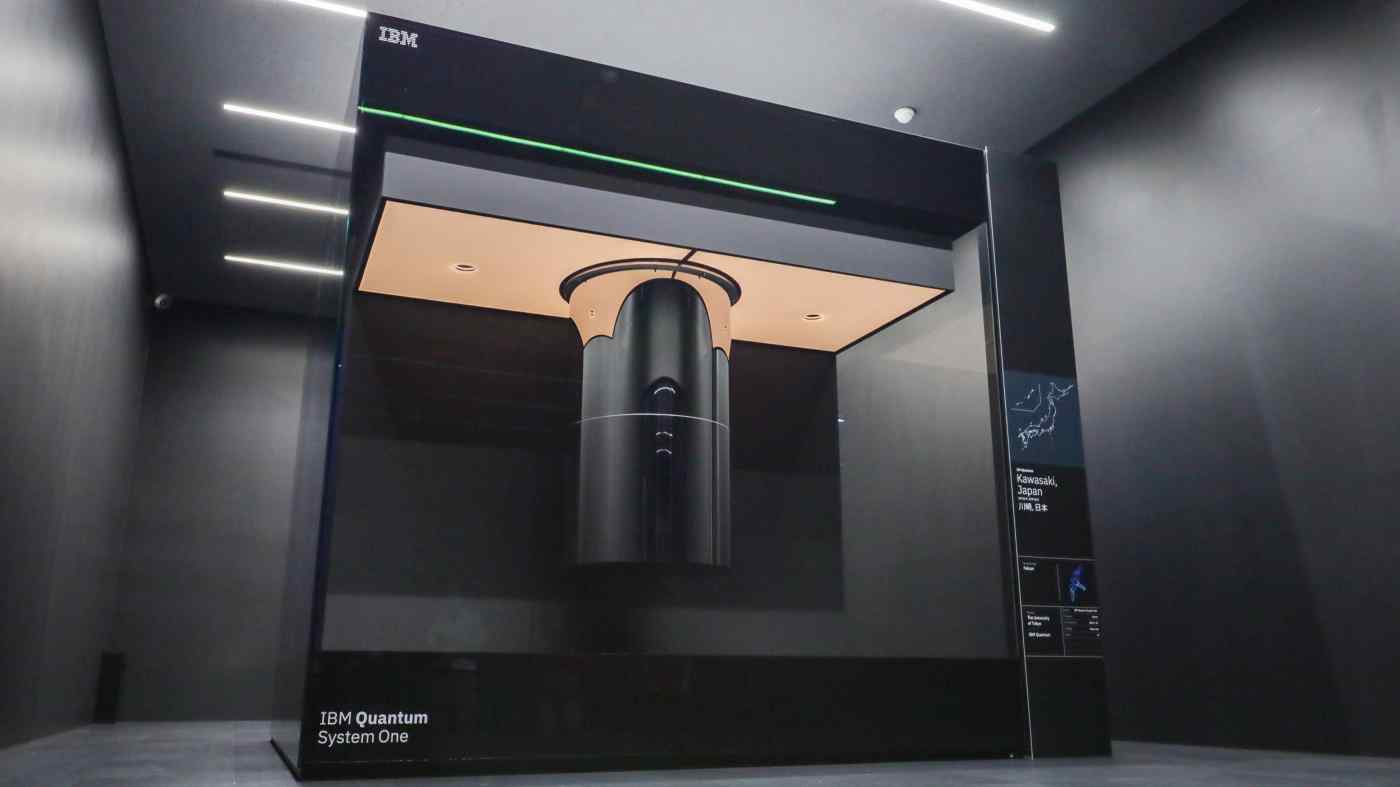
The IBM Quantum System One is Japan’s first commercial quantum computer. (Photo by Hiroshi Endo)
IBM has unveiled Japan’s first quantum computer for commercial applications, its Japanese arm said Tuesday, as Washington and Tokyo join hands to push the field toward practical use with an eye on recent strides by China.
The IBM Quantum System One is up and running at the Kawasaki Business Incubation Center near Tokyo. The University of Tokyo will administer access to the machine, which will be used by the Quantum Innovation Initiative Consortium, whose members include Keio University and Toyota Motor. The project marks a step forward for Japan-U.S. cooperation in a fiercely competitive field that has become embroiled in the battle with China for technological superiority. Quantum computing was among the areas of cooperation discussed by Japanese Prime Minister Yoshihide Suga and U.S. President Joe Biden at their April summit.
Nikkei Asia “US and Japan counter China with powerful IBM quantum computer”
Quantum computers can process complex information at a mind-boggling speed and should eventually vastly outperform even the most powerful of today’s conventional computers. This includes the rapid training of machine learning models and the creation of optimized algorithms. Years of analysis can be cut to a short time with an optimized and stable AI that is powered by quantum computing. The combined solution is expected to bring changes to the AI hardware ecosystem
Techhq.com “Why AI will be so core to real-world quantum computing”
In a report by McKinsey, quantum computers have four fundamental capabilities that differentiate them from today’s classical computers: quantum simulation, in which quantum computers model complex molecules; optimization (that is, solving multivariable problems with unprecedented speed); quantum artificial intelligence (AI), utilizes better algorithms that could transform machine learning across industries as diverse as pharma and automotive; and prime factorization, which could revolutionize encryption.
Techhq.com “Why AI will be so core to real-world quantum computing”
A group of researchers led by Martin Schulz of the Leibniz Supercomputing Center (Munich) presented a paper in which they argue HPC architectural landscape of High-Performance Computing (HPC) is undergoing a seismic shift.
4 Guiding Principles for the Future of HPC Architecture
Energy consumption is no longer merely a cost factor but also a hard feasibility constraint for facilities.
Specialization is key to further increase performance despite stagnating frequencies and within limited energy bands.
A significant portion of the energy budget is spent moving data and future architectures must be designed to minimize such data movements.
Large-scale computing centers must provide optimal computing resources for increasingly differentiated workloads.
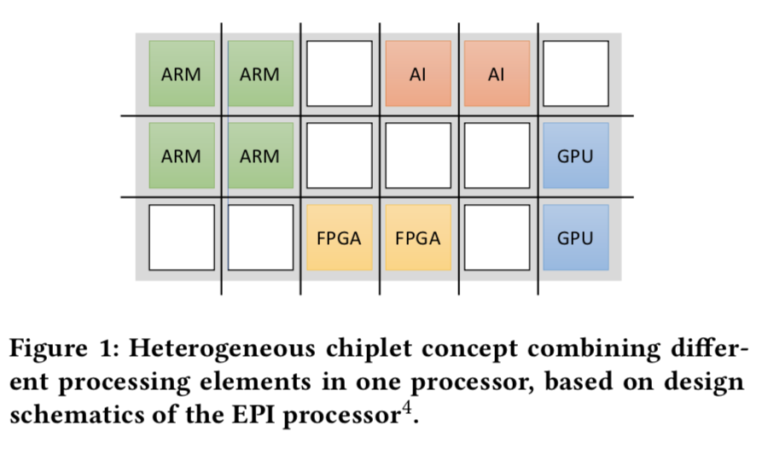
Ideas Snippets – Integrated Heterogeneity
Integrated Heterogenous Systems are a promising alternative, which integrate multiple specialized architectures on a single node while keeping the overall system architecture a homogeneous collection of mostly identical nodes. This allows applications to switch quickly between accelerator modules at a fine-grained scale, while minimizing the energy cost and performance overhead, enabling truly heterogeneous applications.
Integrated HPC Systems and How They will Change HPC System Operations
Leibniz-SC-Paper_fig1-768×449
Ideas Snippets – Challenges of a Integrated Heterogeneity
a single application is likely not going use all specialized compute elements at the same time, leading to idle processing elements. Therefore, the choice of the best-suited accelerator mix is an important design criterion during procurement, which can only be achieved via co-design between the computer center and its users on one side and the system vendor on the other. Further, at runtime, it will be important to dynamically schedule and power the respective compute resources. Using power overprovisioning, i.e., planning for a TDP and maximal node power that is reached with a subset of dynamically chosen accelerated processing elements, this can be easily achieved, but requires novel software approaches in system and resource management.”
They note the need for programming environments and abstractions to exploit the different on-node accelerators. “For widespread use, such support must be readily available and, in the best case, in a unified manner in one programming environment. OpenMP, with its architecture-agnostic target concept, is a good match for this. Domain-specific frameworks, as they are, e.g., common in AI, ML or HPDA (e.g., Tensorflow, Pytorch or Spark), will further help to hide this heterogeneity and help make integrated platforms accessible to a wide range of users
HPCWire – Summer Reading: “High-Performance Computing Is at an Inflection Point”
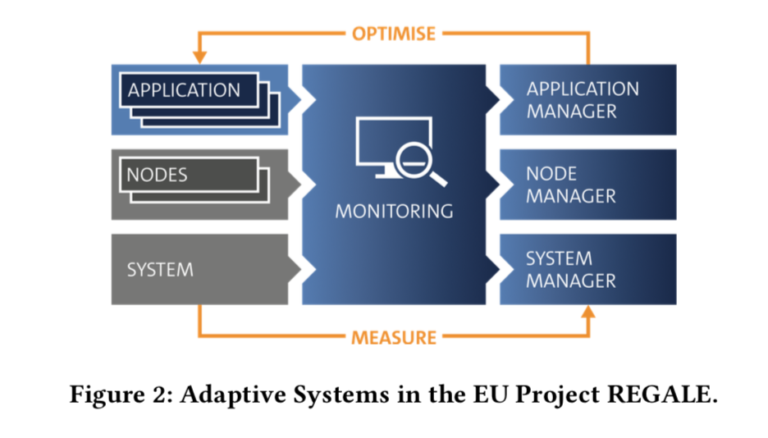
Idea Snippets – Coping with Idle Periods among different Devices (Project Regale)
Application Level. Changing application resources in terms of number and type of processing elements dynamically.
Node Level. Changing node settings, e.g. power/energy consumption via techniques like DVFS or power capping as well as node level partitioning of memory, caches, etc.
System Level. Adjusting system operation based on work- loads or external inputs, e.g., energy prices or supply levels.
HPCWire – Summer Reading: “High-Performance Computing Is at an Inflection Point”
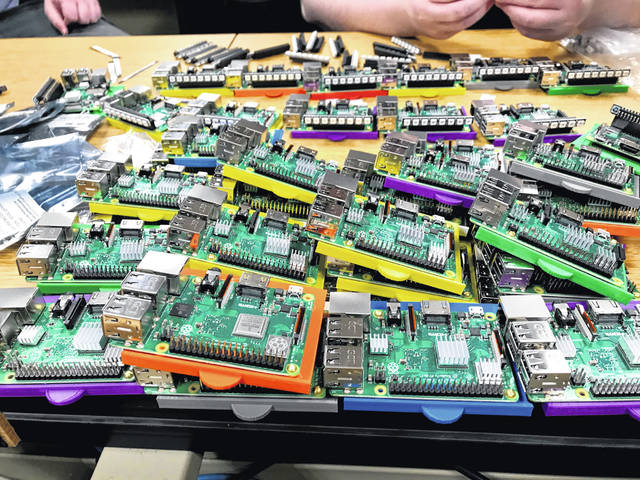
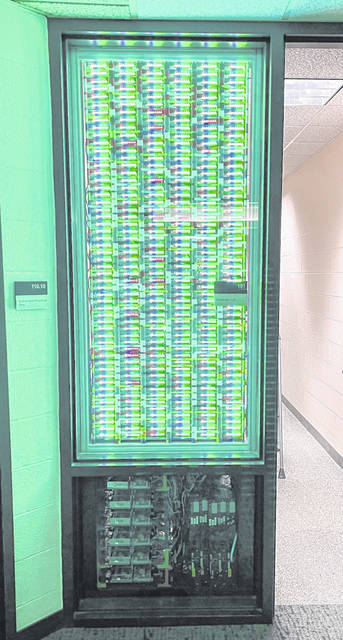
A supercomputer capable of searching the outer limits of space for alien life and helping stop the spread of COVID-19 is located close to home at Southern State Community College, where computer science students learned valuable knowledge and skills in their field by building it themselves. “This is an amazing example of student-selected, project-based learning,” said Computer Science Professor Josh Montgomery. “This project took a wide range of skills to complete.”
According to Montgomery, the supercomputer is composed of 320 Raspberry Pi 3 mini computers with access to 1,280 processing cores and 320 gigabytes of Random Access Memory storage, making it a powerful device with many capabilities. Montgomery said the computer has crunched data for programs like the Search for Extraterrestrial Intelligence, which is an effort to detect evidence of technological civilizations that may exist elsewhere in the universe, particularly in our galaxy, according to its website.
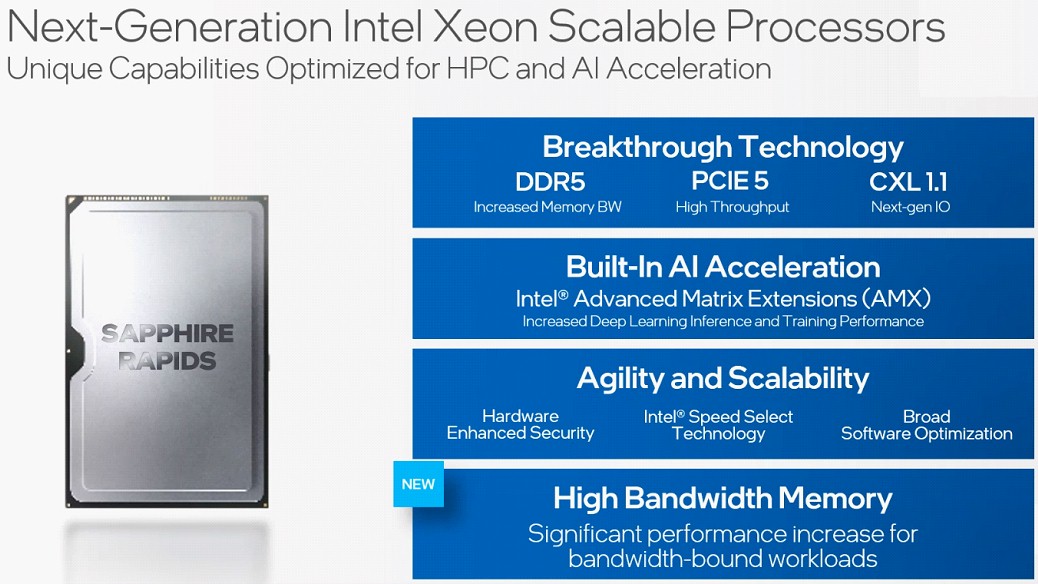
Intel has delayed production of its next-generation Xeon Scalable CPUs, code-named Sapphire Rapids, to the first quarter of 2022 and said it will start ramping shipments by at least April of next year.
Spelman said Intel is delaying Sapphire Rapids, the 10-nanometer successor to the recently launched Ice Lake server processors, because of extra time needed to validate the CPU.
“Given the breadth of enhancements in Sapphire Rapids, we are incorporating additional validation time prior to the production release, which will streamline the deployment process for our customers and partners. Based on this, we now expect Sapphire Rapids to be in production in the first quarter of 2022, with ramp beginning in the second quarter of 2022,” Spelman wrote.
CRN (Intel Delays Sapphire Rapids Xeon CPU Production To Q1 2022)



 The Linux Cluster