SINGAPORE – Multiple organisations including the Central Provident Fund (CPF) Board, EZ-Link, the Esplanade and Nanyang Technological University (NTU) saw disruptions to their Web services on Wednesday as a result of the outage of the Microsoft Azure cloud service.
Microsoft Azure said on its website that a utility power surge in the South-east Asia region at 3.19am on Wednesday had tripped a subset of the cooling units in a data centre and brought them offline.
Azure said it “proactively powered down a small subset of selected compute and storage scale units” to minimise the damage to hardware, but was unable to say when services would be restored, as an extended period would be needed to restore cooling capacity.
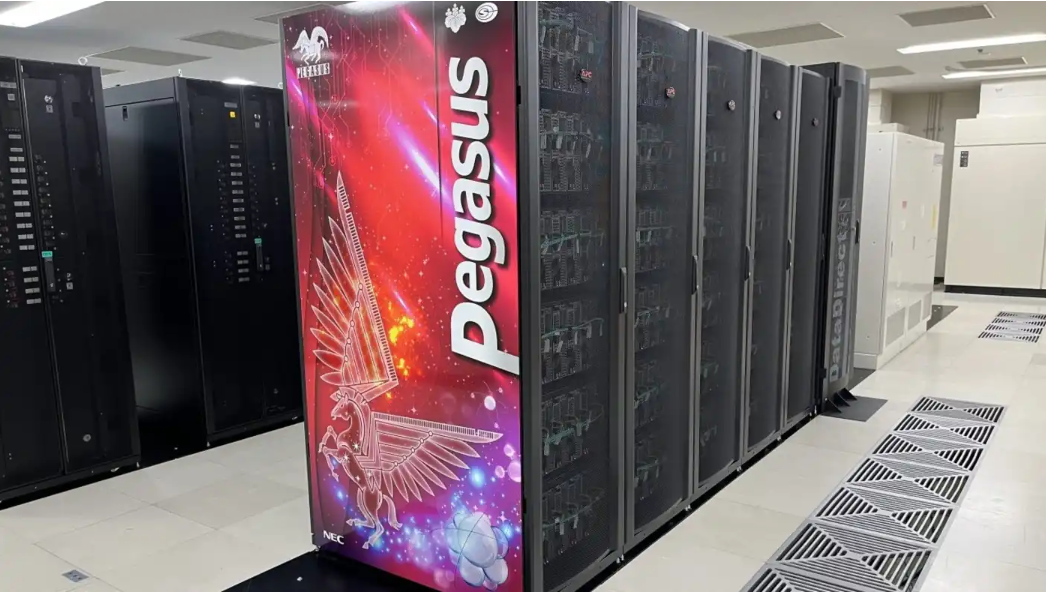
Pegasus boasts 120 of Nvidia’s cutting-edge H100 graphics-processing units. The same technology was used in the Lenovo-built Henri, which was crowned the world’s most energy-efficient supercomputer in November.
These are combined with state-of-the-art central processing units from Intel, giving Pegasus a theoretical peak performance of 6.5 petaflops — 6.5 quadrillion floating point operations per second. …… ……
Persistent memory is also used in addition to conventional DRAM. Accessing data from it takes longer than from DRAM. But it consumes less energy and promises around 10 times the capacity at a similar cost, according to the center. Persistent memory can handle both temporary and long-term data storage
…..
Using persistent memory allows Pegasus to tap more of its capabilities without requiring a major increase in cost or energy consumption.
---
- hosts: all
remote_user: ansible
tasks:
- name: Ensure NTP is installed
yum:
name: ntp
state: present
become: True
- name: Ensure the timezone is set to UTC
file:
src: /usr/share/zoneinfo/GMT
dest: /etc/localtime
state: link
become: True
- name: Ensure the NTP service is running and enabled
service:
name: ntpd
state: started
enabled: True
become: True
The first set of codes deal with the installation and enabling of HTTPd package and services. In addition, both HTTP and HTPS must be able to pass through the firewalld
--
- hosts: all
remote_user: ansible
tasks:
- name: Ensure the HTTPd package is installed
yum:
name: httpd
state: present
become: True
- name: Ensure the HTTPd service is enabled and running
service:
name: httpd
state: started
enabled: True
become: True
- name: Ensure HTTP can pass the firewall
firewalld:
service: http
state: enabled
permanent: True
immediate: True
become: True
- name: Ensure HTTPS can pass the firewall
firewalld:
service: https
state: enabled
permanent: True
immediate: True
become: True
Reviewing and Running the Deployment, we can use the command to fire it.
Assuming the Website is a simple single-page website using a simple template call index.html.j2
---
- hosts: all
remote_user: ansible
tasks:
- name: Ensure the website is present and updated
template:
src: index.html.j2
dest: /var/www/html/index.html
owner: root
group: root
mode: 0644
become: True
Just a note that the “become: True” parameter represents the fact that the tasks should be executed with sudo access. In other words, the sudo user’s file should allow access
There are reports of an ongoing ransomware campaign actively exploiting a vulnerability (CVE-2021-21974) in unpatched VMware ESXi servers.
Successful exploitation of the vulnerability could allow an attacker to perform remote code execution by triggering the heap-overflow issue in OpenSLP service.
The following versions of the products are affected by the aforementioned vulnerability:
• ESXi versions 7.x earlier than ESXi70U1c-17325551
• ESXi versions 6.7.x earlier than ESXi670-202102401-SG
• ESXi versions 6.5.x earlier than ESXi650-202102101-SG
Users and administrators of affected product versions are advised to upgrade to the latest versions immediately. As a precaution, a full system scan should also be performed to detect any signs of compromise. Users and administrators are also advised to assess if the ransomware campaign-targeted port 427 can be disabled without disrupting operations.
Users and administrators may also wish to configure their firewall rules to block any connections to the following IP addresses purportedly carrying out the attacks:
In this humorous and thought provoking article, we discuss certain myths and legends that are folklore among members of the high-performance computing community. We collected those myths from conversations at conferences and meetings, product advertisements, papers, and other communications such as tweets, blogs, and news articles within (and beyond) our community. We believe they represent the zeitgeist of the current era of massive change, driven by the end of many scaling laws such as ennard scaling and Moore’s law. While some laws end, new directions open up, such as algorithmic scaling or novel architecture research. However, these myths are rarely based on scientific facts but often on some evidence or argumentation. In fact, we believe that this is the very reason for the existence of many myths and why they cannot be answered clearly. While it feels like there should be clear answers for each, some may remain endless philosophical debates such as the question whether Beethoven was better than Mozart. We would like to see our collection of myths as a discussion of possible new directions for research and industry investment
I have been learning from this book Fabio Alessandro Locati, published under Packt>
I thought I just capture a few learning notes as I read.
Introduction to Playbooks
Playgroups are one of the core features of Ansible and tell what Ansible what to execute. They are like a do-list for Ansible that contains a list of tasks; each task internally links to a piece of code called a module
- hosts: all
remote_user: vagrant
tasks:
- name: Ensure the HTTPd package is installed
yum:
name: httpd
state: present
become: True
- name: Ensure the HTTPd service is enabled and running
service:
name: httpd
state: started
enabled: True
become: True
What it means?
hosts: List the Host or Host groups. The Host field is required. The –list-hosts-host will let us know which hosts the playbook is using.
remote_user: The user Ansible will be using while logging onto the system.
There are 2 tasks.
The first one is to ensure that the httpd package is present
The 2nd one is to enable the httpd service is enabled and running
The tasks are quite self-explanatory.
become: True. The commands should be executed with sudo access. If the sudo user’s file does not allow the user to run the particular command, the command will fail
Running a Playbook
$ ansible-playbook -i host setup_apache.yml
Ansible Verbosity
You can increase the verbosity by using the parameter -v, -vv or -vvv
Variables in Ansible
---
- hosts: all
remote_user: vagrant
tasks:
- name: Print OS and version
debug:
msg: '{{ ansible_distribution }} {{ ansible_distribution_version }}'
Creating the Ansible User
---
- hosts: all
user: vagrant
tasks:
- name: Ensure ansible user exists
user:
name: ansible
state: present
comment: Ansible
become: True
- name: Ensure ansible user accepts the SSH key
authorized_key:
user: ansible
key: https://github.com/fale.keys
state: present
become: True
- name: Ensure the ansible user is sudoer with no password required
lineinfile:
dest: /etc/sudoers
state: present
regexp: '^ansible ALL\='
line: 'ansible ALL=(ALL) NOPASSWD:ALL'
validate: 'visudo -cf %s'
become: True
The lineinfile is an interesting module. It works in a similar way to sed (a stream editor) where you specify the regular expression that will be used to match the line, and then specify the new line that will be used to substitute the matched line.
‘Data Centre-as-a-Service’ pioneer, ECL, has announced the launch of what it claims is the world’s first modular, sustainable, off-grid data centre that uses green hydrogen as its primary power source. The company further claims to be able to deliver data centres in one megawatt (MW) blocks that can achieve 99.9999 per cent uptime. ….. ….. While other data center providers have deployed hydrogen fuel cells as backup power supplies, and with some conducting trials of systems forecast for production delivery in three-to-five years, ECL asserts that it is the first provider to deliver a fully-green hydrogen-powered data centre. This leapfrog innovation is enabled by bringing together several disruptive technologies including green hydrogen-based power generation, battery energy storage and highly reliable power architecture without dependence on the utility grid. ….. ….. ECL also said that its cooling innovations enable much higher density-per-rack than traditional data centre providers, a strong benefit given the increasing per-server power consumption driven by accelerating chip and system density. Water created as a by-product of hydrogen-based power generation is used to cool ECL’s server racks, eliminating the need for external water sources. Combining this with proprietary rear door heat exchange technology results in lower Power Usage Effectiveness (PUE) ratios than any other colocation data centre provider.
In this video, learn how Portworx provides high availability to your data rich application and how it does this by providing synchronous replication at the volume granular level.