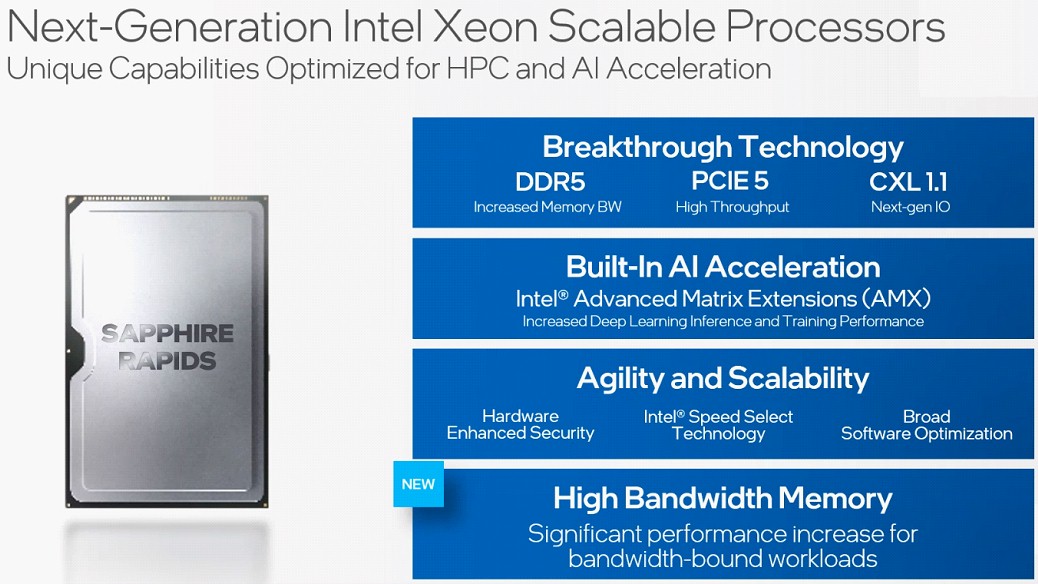
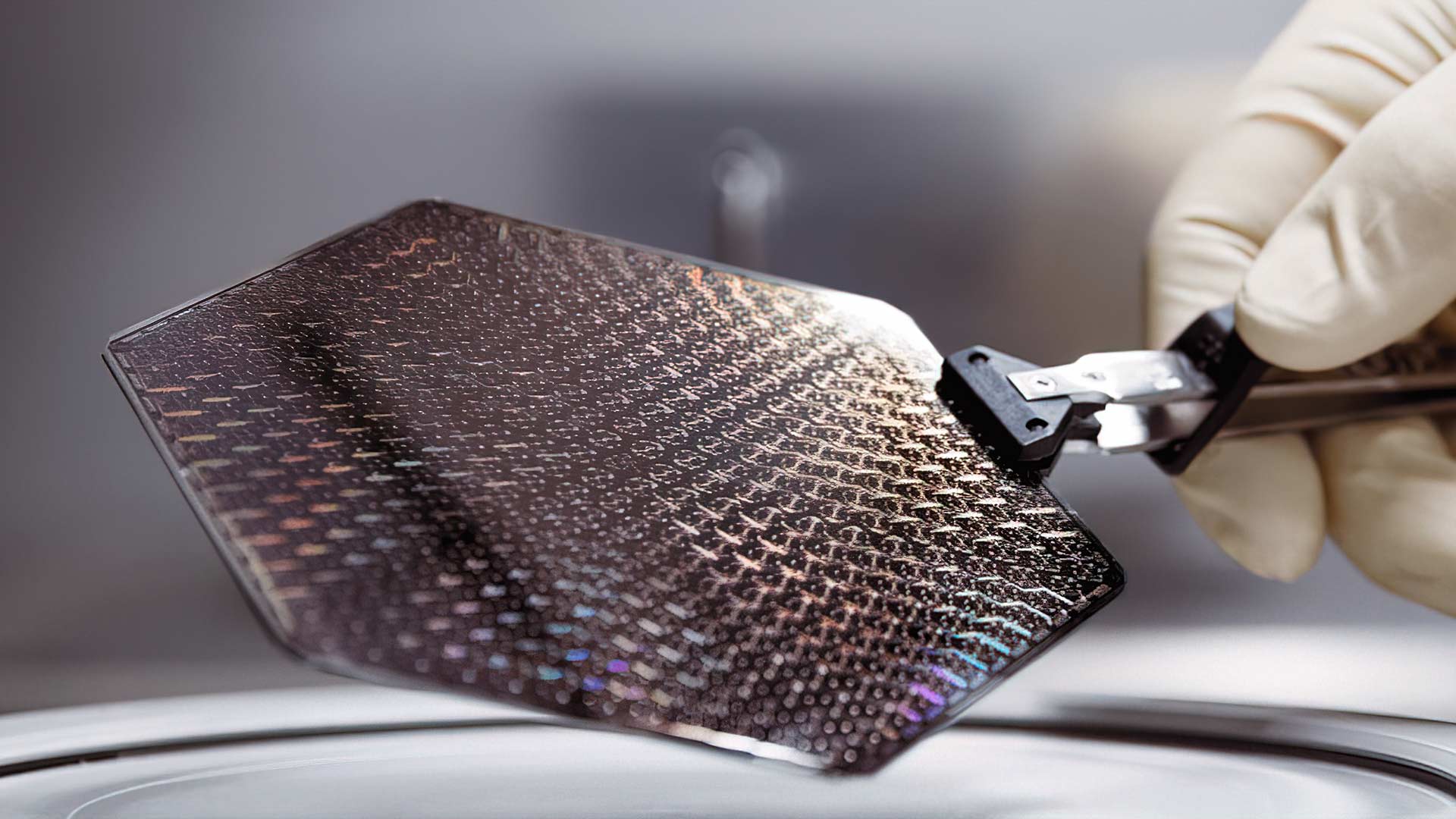
Intel has delayed production of its next-generation Xeon Scalable CPUs, code-named Sapphire Rapids, to the first quarter of 2022 and said it will start ramping shipments by at least April of next year.
Spelman said Intel is delaying Sapphire Rapids, the 10-nanometer successor to the recently launched Ice Lake server processors, because of extra time needed to validate the CPU.
“Given the breadth of enhancements in Sapphire Rapids, we are incorporating additional validation time prior to the production release, which will streamline the deployment process for our customers and partners. Based on this, we now expect Sapphire Rapids to be in production in the first quarter of 2022, with ramp beginning in the second quarter of 2022,” Spelman wrote.
CRN (Intel Delays Sapphire Rapids Xeon CPU Production To Q1 2022)
Zuchongzhi Quantum Supercomputing Picture by (University of Science and Technology of China)
Researchers in China unveiling a super-advanced 66-qubit quantum supercomputer called Zuchongzhi, which by one important metric is the most powerful machine of its kind we’ve seen to date. The performance of Zuchongzhi is undoubtedly impressive: it finished a designated quantum benchmark task in around 70 minutes, and its creators claim the world’s most powerful ‘classical’ (non-quantum) supercomputer to date would need around eight years to get through the same set of calculations.
Science Alert (Record-Breaking Chinese Supercomputer Marks New Quantum Supremacy Milestone)
CXL Fireside Chat Stephen Van Doren, Intel Fellow, Director of Processor Interconnect Architecture, Intel Corporation
Intel System Server D50TNP for HPC Scott Misage, Manager Product Development & Architecture, Intel Corporation Brian Caslis, Product Line Manager, Intel Corporation Jim Russell, Project Design Manager, Intel Corporation
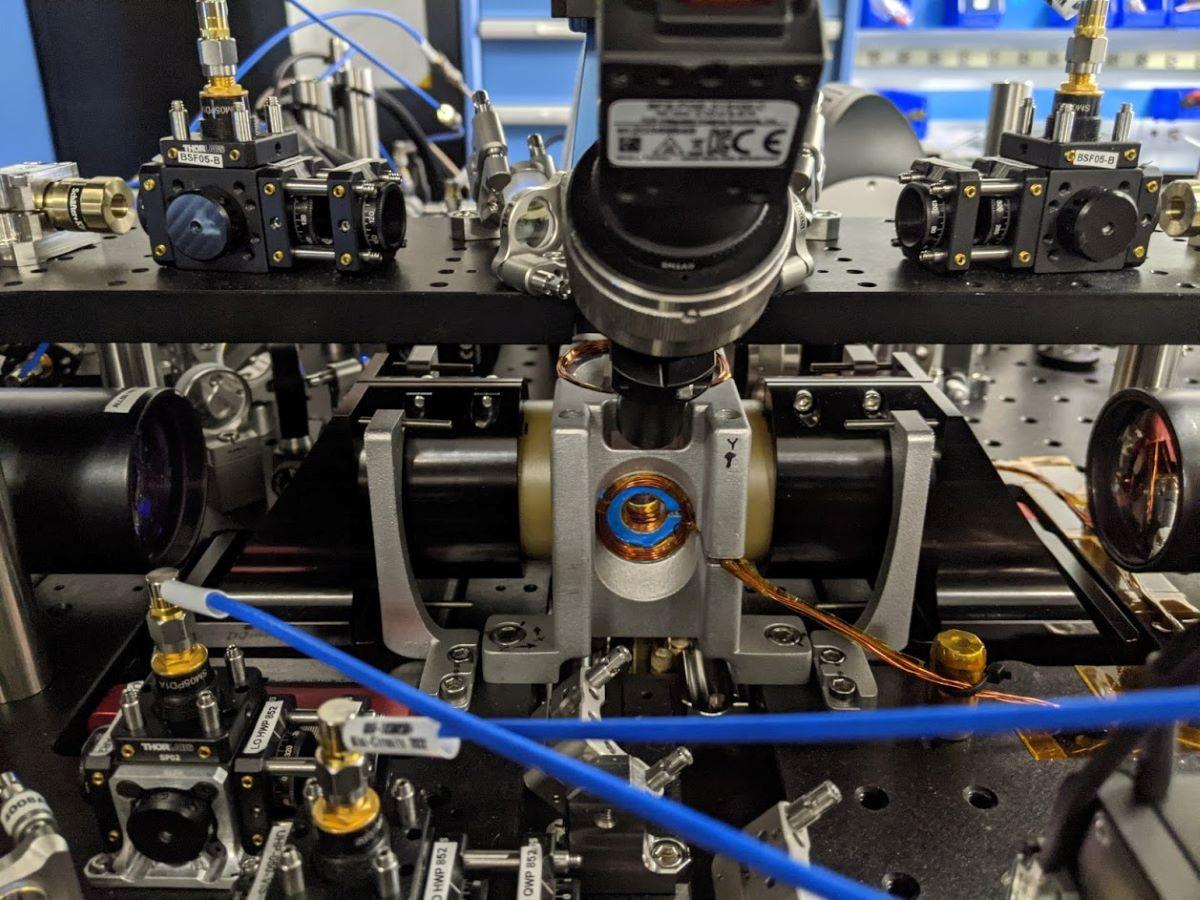
By cooling atoms down to near absolute zero and then controlling them with lasers, a company has successfully created a 100-qubit quantum processor that compares to the systems developed by leading quantum players to date. ColdQuanta, a US-based company that specializes in the manipulation of cold atoms, unveiled the new quantum processor unit, which will form the basis of the company’s 100-qubit gate-based quantum computer, code-named Hilbert, launching later this year after final tuning and optimization work. here are various different approaches to quantum computing, and among those that have risen to prominence in the last few years feature superconducting systems, trapped ions, photonic quantum computers and even silicon spin qubits.
ZDNet “Quantum computing: This new 100-qubit processor is built with atoms cooled down near to absolute zero”
I have put up a article from Nvidia Perspective on the Top 500 Interconnect Trends. There is another article put up by the NextPlatform that took a closer look at the Infiniband and Ethernet Trends
Taken from The Next Platform “The Eternal Battle Between Infiniband and Ethernet”
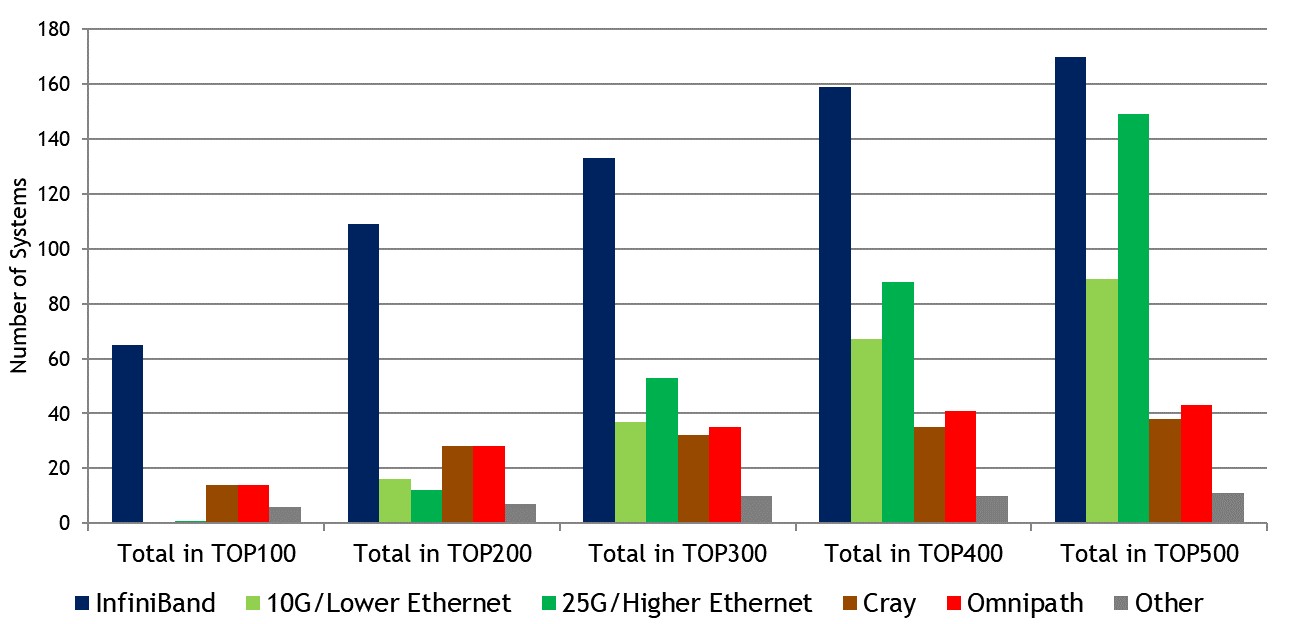
The penetration of Ethernet rises as the list fans out, as you might expect, with many academic and industry HPC systems not being able to afford InfiniBand or not willing to switch away from Ethernet. And as those service providers, cloud builders, and hyperscalers run Linpack on small portions of their clusters for whatever political or business reasons they have. Relatively slow Ethernet is popular in the lower half of the Top500 list, and while InfiniBand gets down there, its penetration drops from 70 percent in the Top10 to 34 percent in the complete Top500.
Nvidia’s InfiniBand has 34 percent share of Top500 interconnects, with 170 systems, but what has not been obvious is the rise of Mellanox Spectrum and Spectrum-2 Ethernet switches on the Top500, which accounted for 148 additional systems. That gives Nvidia a 63.6 percent share of all interconnects on the Top500 rankings. That is the kind of market share that Cisco Systems used to enjoy for two decades in the enterprise datacenter, and that is quite an accomplishment.
Taken from The Next Platform “The Eternal Battle Between Infiniband and Ethernet”
Quantum computing is coming on leaps and bounds. Now there’s an operating system available on a chip thanks to a Cambridge University-led consortia with a vision is make quantum computers as transparent and well known as RaspberryPi. This “sensational breakthrough” is likened by the Cambridge Independent Press to the moment during the 1960s when computers shrunk from being room-sized to being sat on top of a desk. Around 50 quantum computers have been built to date, and they all use different software – there is no quantum equivalent of Windows, IOS or Linux. The new project will deliver an OS that allows the same quantum software to run on different types of quantum computing hardware.
Redshark “Quantum Computing just got desktop sized”
IBM researchers have finally proven in a real-world experiment that quantum computers are superior to classical devices – although for now, only at a miniature scale.
Big Blue’s quantum team set out to discover if today’s quantum devices, despite their limitations, could be used to complete a task that cannot be done on a classical system.
Since quantum computing is still in its infancy, the researchers leveled the playing field between the two methods by designing a microscopic experiment with limited space – that is, limited amount of available memory.