
Speaker: Marc Hamilton, VP of Solutions Architecture and Engineering, NVIDIA Panelists: Nicola Rieke, Dion Harris, Timothy Costa, Gilad Shainer, Geetika Gupta
Author: kittycool only
China unveiling an advanced 66-qubit quantum supercomputer
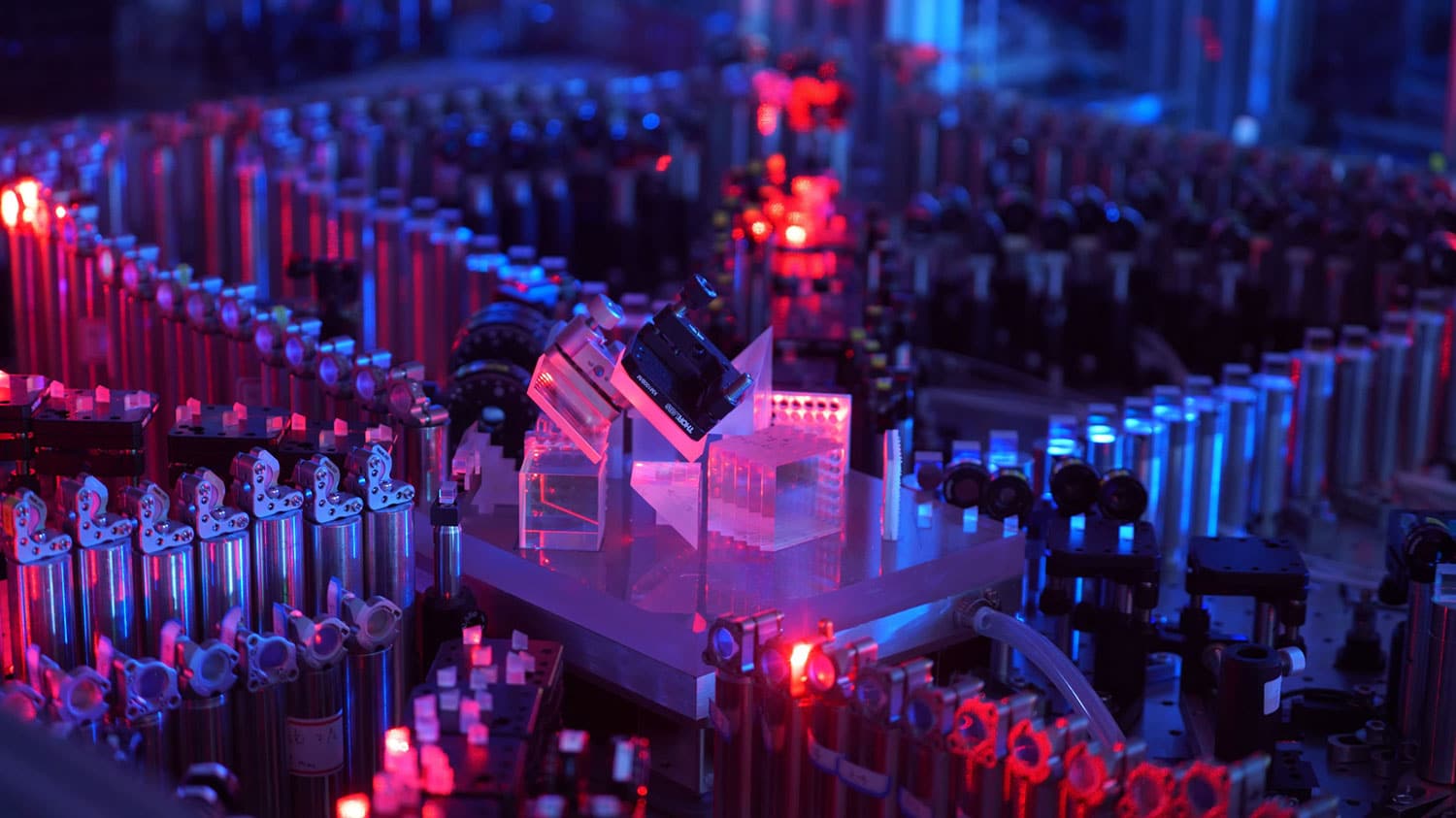
Researchers in China unveiling a super-advanced 66-qubit quantum supercomputer called Zuchongzhi, which by one important metric is the most powerful machine of its kind we’ve seen to date. The performance of Zuchongzhi is undoubtedly impressive: it finished a designated quantum benchmark task in around 70 minutes, and its creators claim the world’s most powerful ‘classical’ (non-quantum) supercomputer to date would need around eight years to get through the same set of calculations.
Science Alert (Record-Breaking Chinese Supercomputer Marks New Quantum Supremacy Milestone)
For more Information, see Record-Breaking Chinese Supercomputer Marks New Quantum Supremacy Milestone
Intel Video-on-Demand at ISC21
For more Information, do take a look at https://hpcevents.intel.com/lobby
Selected Videos.
Accelerating the Possibilities with HPC
by Trish Damkroger, VP and GM, High Performance Computing Group, Intel Corporation
Building HPC Systems with Intel for Today and Tomorrow
Jeff Watters, Director of the HPC Portfolio and Strategic Engagements, Intel Corporation
CXL Fireside Chat
Stephen Van Doren, Intel Fellow, Director of Processor Interconnect Architecture, Intel Corporation
Intel System Server D50TNP for HPC
Scott Misage, Manager Product Development & Architecture, Intel Corporation
Brian Caslis, Product Line Manager, Intel Corporation
Jim Russell, Project Design Manager, Intel Corporation
Ice Lake, Together with Mellanox Interconnect Solutions, Deliver Best in Class Performance for HPC Applications
Gilad Shainer, Senior Vice President Marketing, NVIDIA
Optimizing a Memory-Intensive Simulation Code for Heterogenous Optane Memory Systems
Steffen Christgau, HPC Consultant, Zuse Institute Berlin
For more Video, see https://hpcevents.intel.com/sessions
This new 100-qubit Quantum processors is built with ultracold atoms
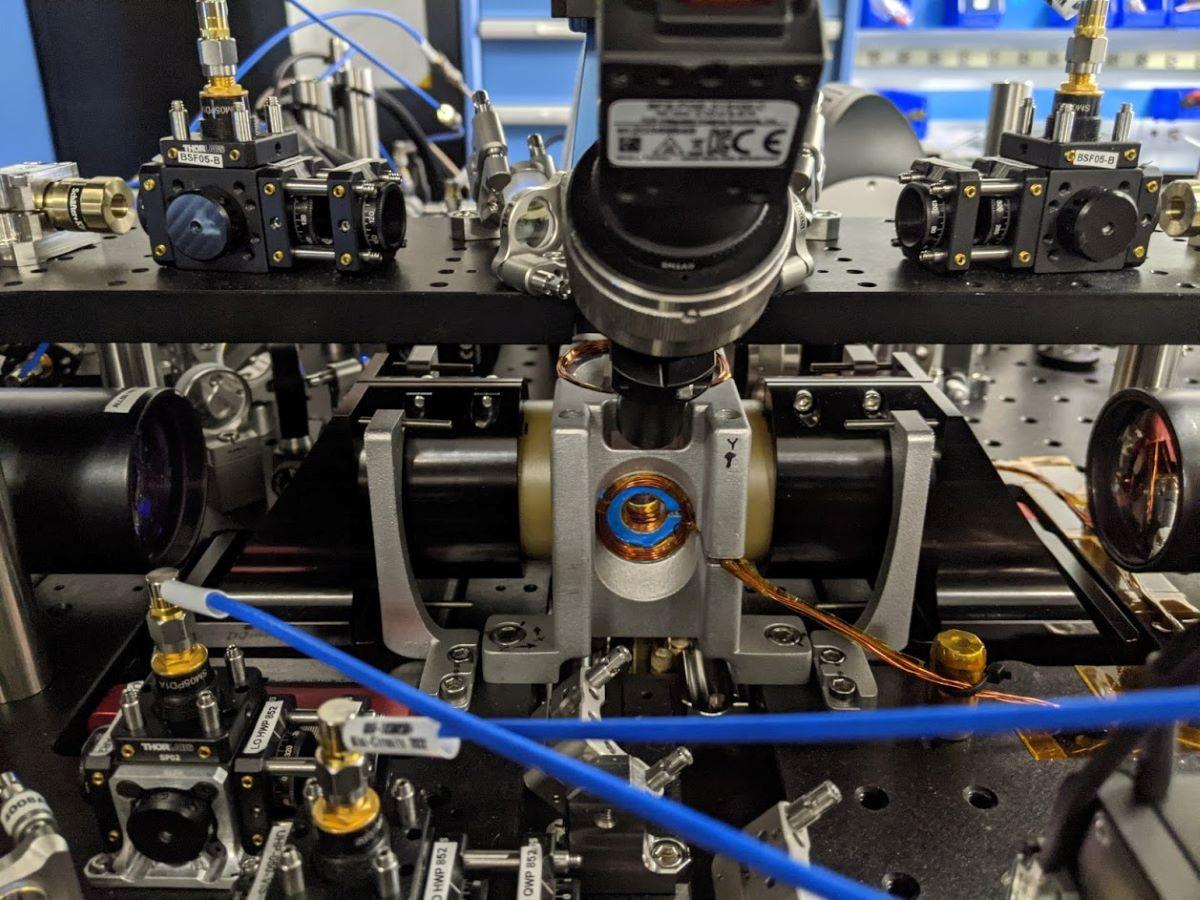
By cooling atoms down to near absolute zero and then controlling them with lasers, a company has successfully created a 100-qubit quantum processor that compares to the systems developed by leading quantum players to date. ColdQuanta, a US-based company that specializes in the manipulation of cold atoms, unveiled the new quantum processor unit, which will form the basis of the company’s 100-qubit gate-based quantum computer, code-named Hilbert, launching later this year after final tuning and optimization work. here are various different approaches to quantum computing, and among those that have risen to prominence in the last few years feature superconducting systems, trapped ions, photonic quantum computers and even silicon spin qubits.
ZDNet “Quantum computing: This new 100-qubit processor is built with atoms cooled down near to absolute zero”
The Article can be found here “Quantum computing: This new 100-qubit processor is built with atoms cooled down near to absolute zero“
Resolving GNU MP not found on CentOS 7
If you are installing package like BiocManager::install(“scDblFinder”)
BiocManager::install("scDblFinder")You may encounters error like
configure: error: GNU MP not found, or not 4.1.4 or up, see http://gmplib.orgThe fix is obvious as seen on error message. If you are using CentOS 7, you can easily fix it via Yum
% yum install gmp-develCompiling R-4.1.0 with GNU

Prerequisites
gnu-6.5
m4-1.4.18
gmp-6.1.0
mpfr-3.1.4
mpc-1.0.3
isl-0.18
gsl-2.1
Compiling PCRE is important or you will face an error like
configure: error: PCRE2 library and headers are required, or use --with-pcre1 and PCRE >= 8.32 with UTF-8 supportAfter you have compile PCRE, you can proceed with the compilation of R-4.1.0
% ./configure --prefix=/usr/local/R-4.1.0 --with-pcre1=/usr/local/pcre-8.42 --with-blas --with-lapack --enable-R-shlibIf there are no issues….
R is now configured for x86_64-pc-linux-gnu

  Source directory:            .
  Installation directory:      /usr/local/R-4.1.0

  C compiler:                  gcc  -g -O2
  Fortran fixed-form compiler: gfortran  -g -O2

  Default C++ compiler:        g++ -std=gnu++14  -g -O2
  C++11 compiler:              g++ -std=gnu++11  -g -O2
  C++14 compiler:              g++ -std=gnu++14  -g -O2
  C++17 compiler:
  C++20 compiler:
  Fortran free-form compiler:  gfortran  -g -O2
  Obj-C compiler:              gcc -g -O2 -fobjc-exceptions

  Interfaces supported:        X11
  External libraries:          pcre1, readline, BLAS(generic), LAPACK(generic), curl
  Additional capabilities:     PNG, JPEG, NLS, ICU
  Options enabled:             shared R library, R profiling

  Capabilities skipped:        TIFF, cairo
  Options not enabled:         shared BLAS, memory profiling

  Recommended packages:        yes
Make and Make Install the Files
% make -j 8.....
gcc -I"/home/user1/Downloads/R-4.1.0/include" -DNDEBUG -I/usr/local/include -fpic -g -O2 -c anova.c -o anova.o
gcc -I"/home/user1/Downloads/R-4.1.0/include" -DNDEBUG -I/usr/local/include -fpic -g -O2 -c anovapred.c -o anovapred.o
gcc -I"/home/user1/Downloads/R-4.1.0/include" -DNDEBUG -I/usr/local/include -fpic -g -O2 -c branch.c -o branch.o
gcc -I"/home/user1/Downloads/R-4.1.0/include" -DNDEBUG -I/usr/local/include -fpic -g -O2 -c bsplit.c -o bsplit.o
gcc -I"/home/user1/Downloads/R-4.1.0/include" -DNDEBUG -I/usr/local/include -fpic -g -O2 -c choose_surg.c -o choose_surg.o
g
.....% make installReferences:
A relook at InfiniBand and Ethernet Trends on Top500
I have put up a article from Nvidia Perspective on the Top 500 Interconnect Trends. There is another article put up by the NextPlatform that took a closer look at the Infiniband and Ethernet Trends
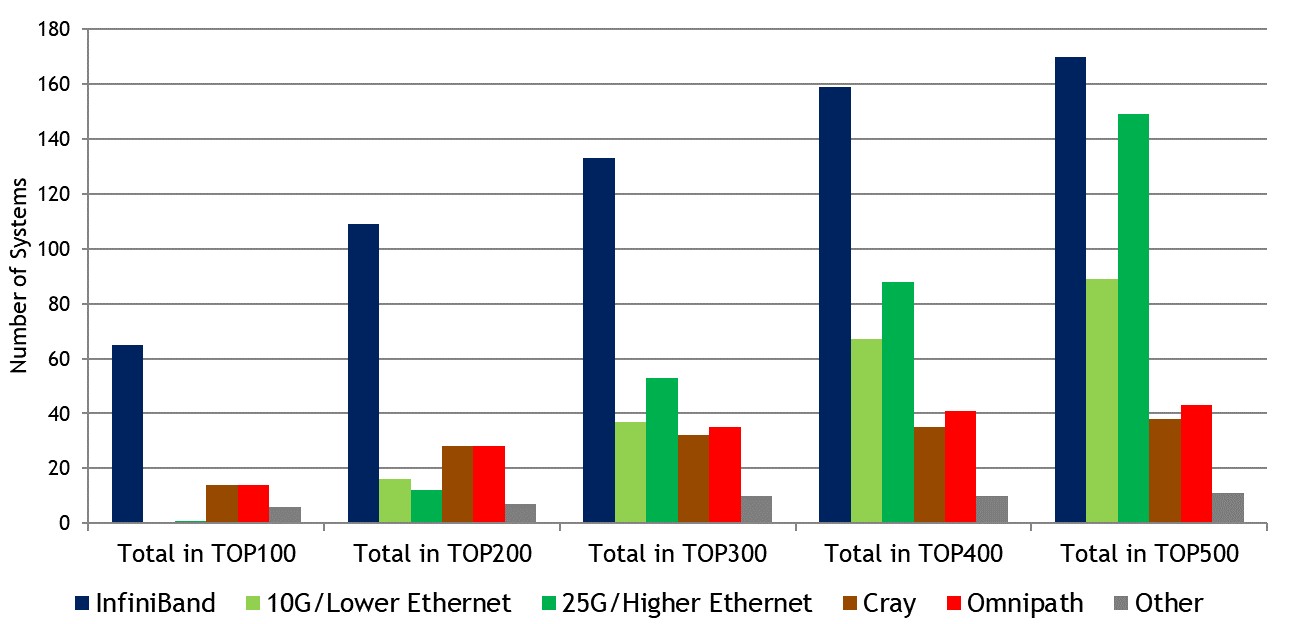
The penetration of Ethernet rises as the list fans out, as you might expect, with many academic and industry HPC systems not being able to afford InfiniBand or not willing to switch away from Ethernet. And as those service providers, cloud builders, and hyperscalers run Linpack on small portions of their clusters for whatever political or business reasons they have. Relatively slow Ethernet is popular in the lower half of the Top500 list, and while InfiniBand gets down there, its penetration drops from 70 percent in the Top10 to 34 percent in the complete Top500.
Nvidia’s InfiniBand has 34 percent share of Top500 interconnects, with 170 systems, but what has not been obvious is the rise of Mellanox Spectrum and Spectrum-2 Ethernet switches on the Top500, which accounted for 148 additional systems. That gives Nvidia a 63.6 percent share of all interconnects on the Top500 rankings. That is the kind of market share that Cisco Systems used to enjoy for two decades in the enterprise datacenter, and that is quite an accomplishment.
Taken from The Next Platform “The Eternal Battle Between Infiniband and Ethernet”
References:
Quantum Computing just got desktop sized
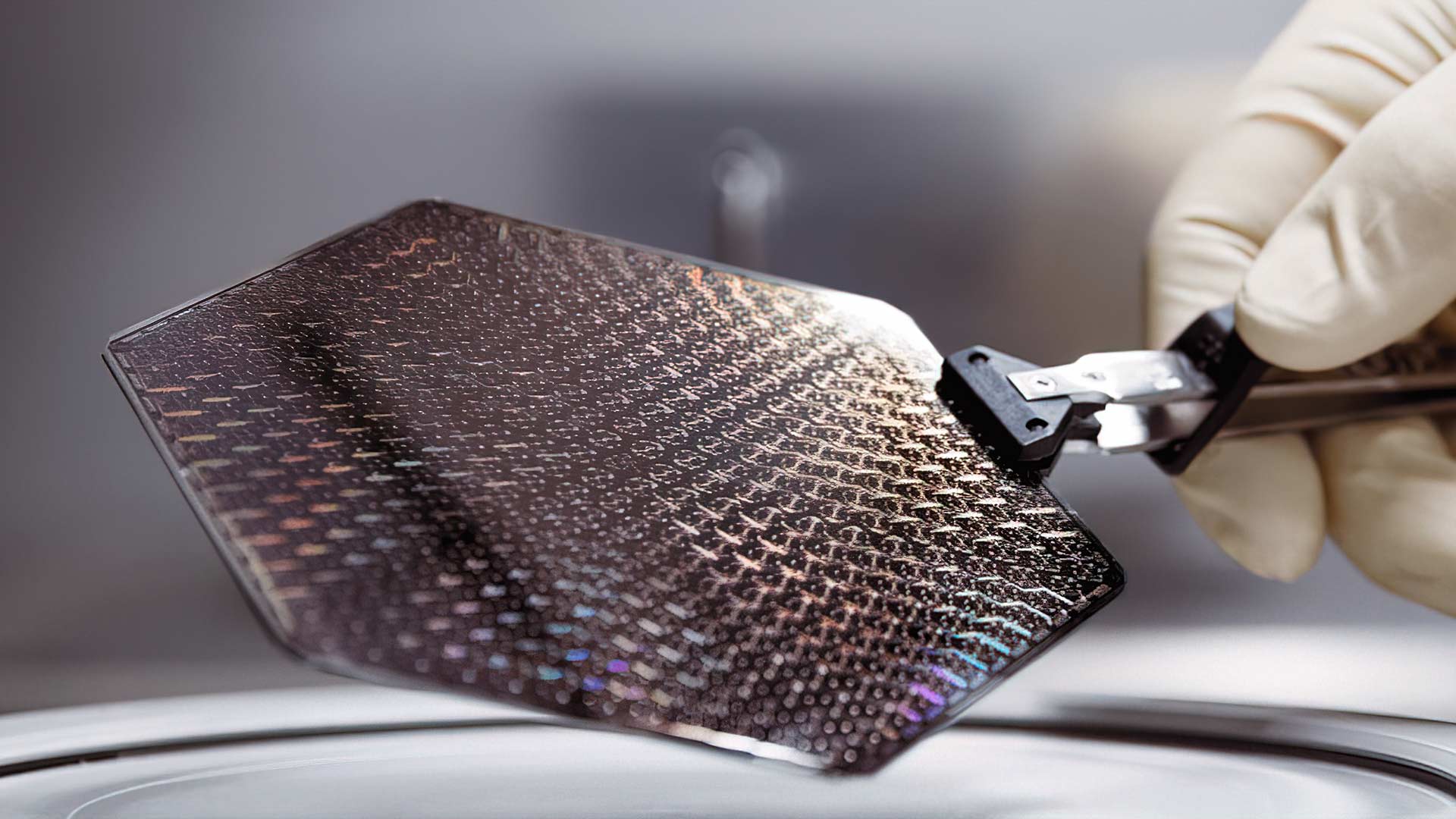
Quantum computing is coming on leaps and bounds. Now there’s an operating system available on a chip thanks to a Cambridge University-led consortia with a vision is make quantum computers as transparent and well known as RaspberryPi. This “sensational breakthrough” is likened by the Cambridge Independent Press to the moment during the 1960s when computers shrunk from being room-sized to being sat on top of a desk. Around 50 quantum computers have been built to date, and they all use different software – there is no quantum equivalent of Windows, IOS or Linux. The new project will deliver an OS that allows the same quantum software to run on different types of quantum computing hardware.
Redshark “Quantum Computing just got desktop sized”
For more information, do take a look at Quantum Computing just got desktop sized
IBM researchers demonstrate the quantum advantage over classical computing
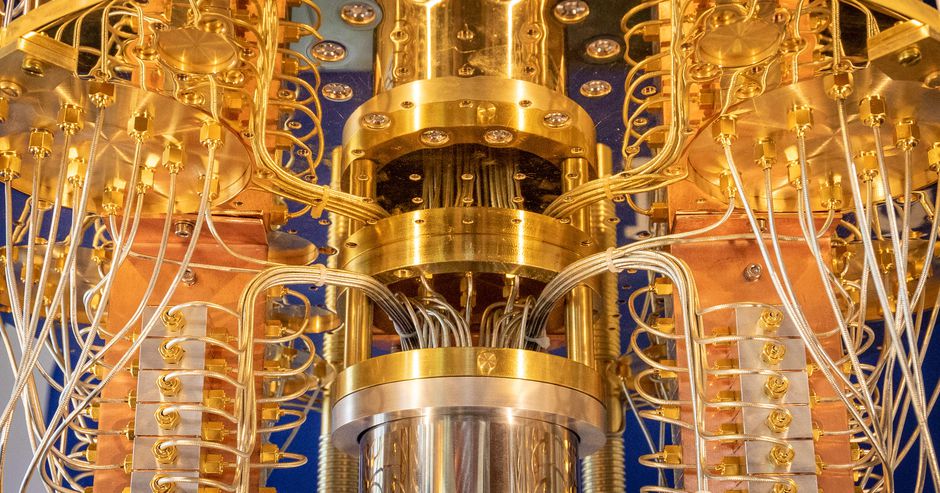
IBM researchers have finally proven in a real-world experiment that quantum computers are superior to classical devices – although for now, only at a miniature scale.
Big Blue’s quantum team set out to discover if today’s quantum devices, despite their limitations, could be used to complete a task that cannot be done on a classical system.
Since quantum computing is still in its infancy, the researchers leveled the playing field between the two methods by designing a microscopic experiment with limited space – that is, limited amount of available memory.
ZD Net
For more Information, see IBM researchers demonstrate the advantage that quantum computers have over classical computers
Top 500 Interconnect Trends
Published twice a year and publicly available at www.top500.org, the TOP500 supercomputing list ranks the world’s most powerful computer systems according to the Linpack benchmark rating system.
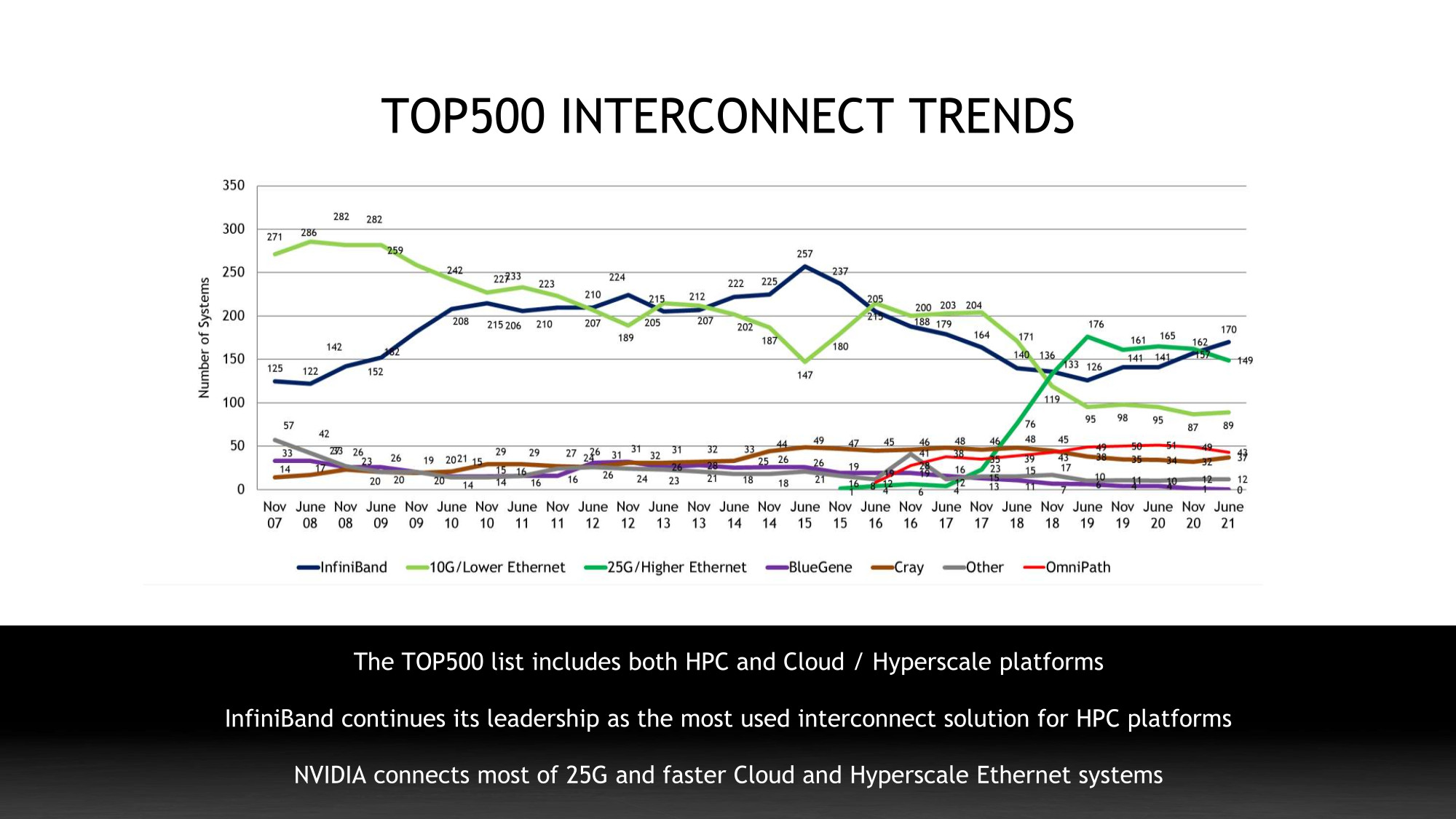
Summary of Findings for Nvidia Networking.
- NVIDIA GPU or Network (InfiniBand, Ethernet) accelerate 342 systems or 68% of overall TOP500 systems
- InfiniBand accelerates seven of the top ten supercomputers in the world
- NVIDIA BlueField DPU and HDR InfiniBand Networking accelerate the world’s 1st academic cloud-native supercomputer at Cambridge University
- NVIDIA InfiniBand and Ethernet networking solutions connect 318 systems or 64% of overall TOP500 platforms
- InfiniBand accelerates 170 systems, 21% growth compared to June 2020 TOP500 list
- InfiniBand accelerates #1, #2 supercomputers in the US, #1 in China, #1, #2 and #3 in Europe
- NVIDIA 25 gigabit and faster Ethernet solutions connect 62% of total Ethernet systems
 The Linux Cluster