
Author: kittycool only
2023 Look Ahead to Platform Engineering

CloudCast: 2023 Look Ahead to Platform Engineering
The Cloudcast discusses platform engineering with the founder and CEO of RackN, Rob Hirschfeld. Starting around the 10-minute mark, the conversation covers the goals and best practices of platform engineering.
Topic 1 – Welcome back to the show, it was great to see you in person at events recently. What have you been focusing on the last couple of years?
Topic 2 – There’s been a lot of discussion about Platform Engineering over the last 6+ months. You’ve been around this space for a while. We’re trying to understand if PE is different from DevOps or SRE or Cloud Platform in the past, or an evolution. Is PE just a common platform maintained with reusable tools, regardless of the infrastructure?
Topic 3 – I’ve heard people say that Cloud Platform and Platform Engineering are colleagues. where one owns/operates the platform, and the other is the “product manager” to the application teams. Is this realistic?
Topic 4 – What does “good” look like for Platform Engineering? Is the goal a frictionless developer experience? Are developer consistency and efficiency valid goals? Are there KPIs or Metrics that “good” teams are striving towards?
Topic 5 – Any interesting technologies that you’re seeing that make Platform Engineering easier, or more manageable?
Topic 6 – Any team dynamics that you’re seeing that make Platform Engineering easier, or more manageable?
Best Practises Guide for using Terraform from Google
Google recently published a new documentation set on HashiCorp Terraform. It aims to “provide guidelines and recommendations for effective development with Terraform across multiple team members and work streams.”
For more information, see Best practices for using Terraform
AMD’s 96 Core Epyc Genoa CPU faster than Intel’s Sapphire Rapid
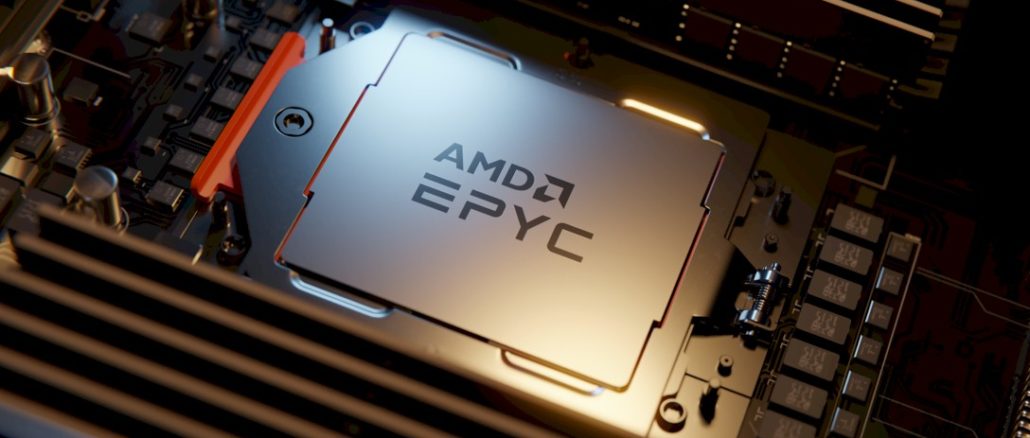
Taken from the article “AMD’s 96 Core Epyc Genoa CPU is Over 70% Faster than Intel’s Xeon Sapphire Rapids Flagship in 2S Mode”
Linux kernel Compilation
….The dual Epyc 9554 (64 cores per socket) is 25-30% faster than the top Intel combo, while the Dual 9654 (96 cores per socket) is over 70% faster than the Sapphire Rapids-SP flagship….Kernel-based Virtual Machine (KVM)
…..64-core Epyc 9554 pair is 25% faster than the latter makes it hard to defend the Intel offering. The Xeon Platinum 8490H mostly competes with the last-gen Milan and Milan-X flagships…..MariaDB and Nginx
AMD’s 96 Core Epyc Genoa CPU is Over 70% Faster than Intel’s Xeon Sapphire Rapids Flagship in 2S Mode
…..The Genoa parts are faster, with a lead of 10% to 40%, while the 64-core Milan-X deals with Sapphire Rapids….
Are Quantum Computers about to Break Online Privacy?
An interesting article from Scientific American. Accorfing to the article
A team of researchers in China has unveiled a technique that—theoretically—could crack the most common methods used to ensure digital privacy, using a rudimentary quantum computer.
Are Quantum Computers about to Break Online Privacy?
The technique worked in a small-scale demonstration, the researchers report, but other specialists are sceptical that the procedure could be scaled up to beat ordinary computers at the task. Still, they warn that the paper, posted late last month on the arXiv repository, is a reminder of the vulnerability of online privacy.
Portworx Lightboard Sessions: Deployment Modes (Hyperconverged, Disaggregated)
In this short video you will learn the two main deployment modes in which Portworx can be installed on your infrastructure.
Portworx Lightboard Sessions: Understanding Storage Pools
In this short video, learn how Portworx clusters infrastructure together into classified storage resource pools for applications.
Portworx Lightboard Sessions: Portworx 101 (Overview)
Learn the basics of Portworx and how it can enable your stateful workloads. This video will discuss the largest fragments of the Portworx platform and how it creates a global namespace to enable virtual volumes for containers.
Installing Julia-1.8.4 and ITensor

If you are using Julia Programming Language and installing Julia-1.8.4, you may want to take a look at a useful guide Installing Julia and ITensor
$ wget https://julialang-s3.julialang.org/bin/linux/x64/1.8/julia-1.8.4-linux-x86_64.tar.gz
$ tar -zxvf julia-1.8.4-linux-x86_64.tar.gz
$ cd julia-1.8.4/bin
$ ./julia
  _       _ _(_)_     |  Documentation: https://docs.julialang.org
  (_)     | (_) (_)    |
   _ _   _| |_  __ _   |  Type "?" for help, "]?" for Pkg help.
  | | | | | | |/ _` |  |
  | | |_| | | | (_| |  |  Version 1.8.4 (2022-12-23)
 _/ |\__'_|_|_|\__'_|  |  Official https://julialang.org/ release
|__/                   |
Adding ITensors to Julia
julia> ]
(@v1.8) pkg>
(@v1.8) pkg> add ITensors
Going back to Julia Prompt
julia> using ITensors;
julia> ITensors.compile()
The directory "/home/user1/.julia/sysimages" doesn't exist yet, creating it now.

Creating the system image "/home/user1/.julia/sysimages/sys_itensors.so" containing the compiled version of ITensors. This may take a few minutes.
[ Info: PackageCompiler: Executing /home/user1/.julia/packages/ITensors/fpBnt/src/packagecompile/precompile_itensors.jl => /tmp/jl_packagecompiler_39UDnM/jl_Ob4eph
After sweep 1 energy=-7.313531193678388  maxlinkdim=10 maxerr=9.32E-05 time=22.605
After sweep 2 energy=-7.365742085591064  maxlinkdim=10 maxerr=8.87E-04 time=0.008
After sweep 3 energy=-7.3661068404588725  maxlinkdim=10 maxerr=9.21E-04 time=0.007
After sweep 1 energy=-7.337730647281005  maxlinkdim=10 maxerr=1.75E-04 time=11.838
After sweep 2 energy=-7.366041088098082  maxlinkdim=10 maxerr=9.31E-04 time=0.031
After sweep 3 energy=-7.366112132349537  maxlinkdim=10 maxerr=9.23E-04 time=0.030

[ Info: PackageCompiler: Done
✔ [06m:15s] PackageCompiler: compiling incremental system image
You will be able to start Julia with a compiled version of ITensors using:

```
~ julia --sysimage /home/user1/.julia/sysimages/sys_itensors.so
```

and you should see that the startup times and JIT compilation times are substantially improved when you are using ITensors.

In unix, you can create an alias with the Bash command:

```
~ alias julia_itensors="julia --sysimage /home/user1/.julia/sysimages/sys_itensors.so -e 'using ITensors' -i"
```

which you can put in your `~/.bashrc`, `~/.zshrc`, etc. This also executes
`using ITensors` so that ITensors is loaded and ready to use, you can leave off `
-e 'using ITensors' -i` if you don't want that. Then you can start Julia with a
version of ITensors installed with the command:

```
~ julia_itensors
```

Note that if you update ITensors to a new version, for example with `using
Pkg; Pkg.update("ITensors")`, you will need to run the `ITensors.compile()`
command again to recompile the new version of ITensors.

"/home/user1/.julia/sysimages/sys_itensors.so"
Portworx Lightboard Sessions: Why choose Portworx?
Portworx is the leading container data management solution for Kubernentes. This short video will explain the Portworx value proposition along with some of the differentiating features such as data mobility, application awareness and infrastructure independence.
 The Linux Cluster